TOP PERFORMING ANNUALS THAT THRIVE IN HOT KANSAS CITY SUMMERS
There’s a certain kind of Kansas City summer heat that separates the tough plants from the pretenders — the stretch of 90-plus degree days with barely a cloud in sight, when your garden beds start looking a little tired by mid-July. But not every plant wilts under pressure. In fact, some annuals do their best work exactly when the temperatures rise.
Lantana, coleus, purslane, marigolds, angelonia, and vinca aren’t just heat-tolerant — they’re heat-loving, and they’ll put on a nonstop show of color and texture while other plants are calling it quits. We are also including a colorful caladium option for those tricky shaded areas that still need a midsummer refresh.
The good news? Our stores still have tables full of these heat-thriving annuals, so if your landscape or containers need a midsummer refresh, now’s the perfect time to stop in and stock up. Below, we’re breaking down a few of our favorites and what makes each one worth a spot in your garden.
Lantana: The Butterfly Magnet
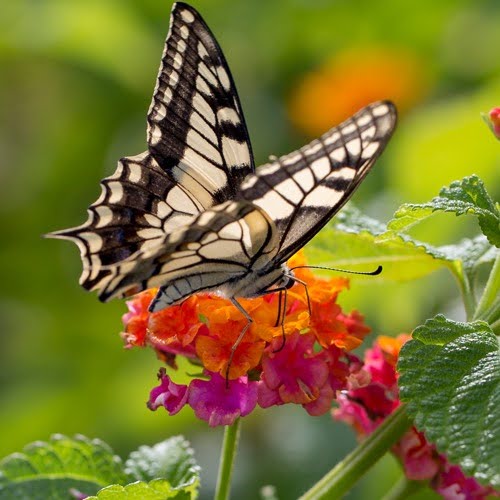
Few plants handle the blazing sun and drought like lantana. This durable annual produces clusters of tiny flowers in fiery combinations of orange, yellow, pink, red, and purple — often with multiple colors on a single cluster that shift as they age.
Most varieties grow 12 to 36 inches tall and wide, though trailing types stay lower and spread nicely over the edges of containers or retaining walls. Lantana wants full sun, at least 6 hours a day, and actually performs better with less water once established.
It’s an absolute pollinator magnet, drawing butterflies and hummingbirds in droves. Use it as a filler in mixed beds, a spiller in patio pots, or massed together as a heat-proof groundcover. It pairs beautifully with ornamental grasses, salvia, and other sun-lovers that won’t be overshadowed by its long bloom season.
Coleus: Foliage That Outshines Flowers
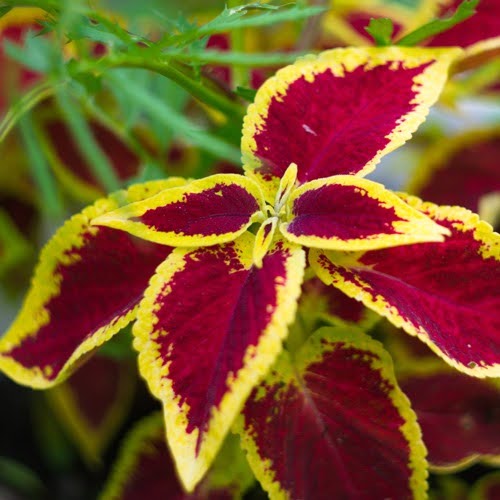
Coleus proves you don’t need flowers to steal the show. Grown for its uniquely patterned foliage in combinations of lime green, burgundy, magenta, cream, and near-black, coleus brings season-long color that never needs deadheading.
Sizes range from compact 12-inch mounds to towering 3-foot specimens, so there’s a variety for every spot. While older varieties preferred shade, most modern sun coleus varieties handle full sun beautifully; they actually develop richer, more saturated colors with more light—just keep the soil consistently moist.
Coleus isn’t a major pollinator draw, but its real merit is as a design tool. It acts as living color that ties together a bed or container, working as a thriller in pots or a colorful backdrop for flowering annuals like impatiens, begonias, or Angelonia. It’s also one of the easiest plants to propagate from cuttings if you want to expand your collection for free.
Marigolds: The Reliable Classic
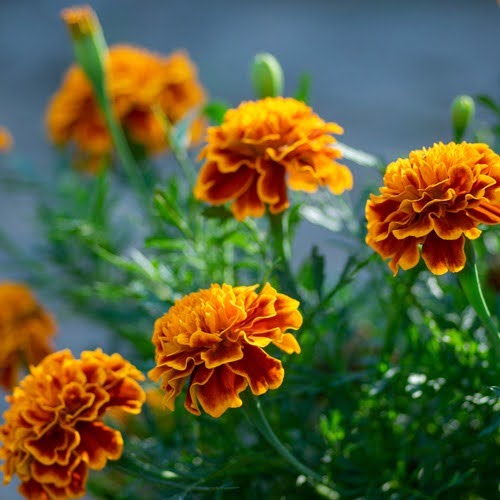
Marigolds have earned their reputation as a garden workhorse for good reason. Their warm-toned blooms in gold, orange, yellow, and mahogany-red bring instant cheer, and they come in sizes ranging from petite 6-inch French marigolds to bold 3-foot African types.
Marigolds demand full sun and, in exchange, will provide continuous blooms from late spring through frost, especially if spent flowers are deadheaded. They’re beloved by bees and butterflies and are frequently planted near vegetable gardens for their cheerful color and traditional companion-planting appeal.
In the landscape, use dwarf varieties as colorful edging or in mass plantings, and taller varieties as mid-border color. They combine nicely with zinnias, salvia, and ornamental peppers for a hot-colored, high-summer palette.
Purslane: The Ultimate Drought-Buster
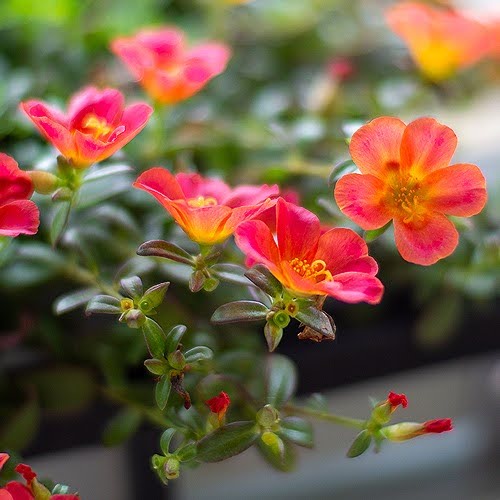
If you have a hot, sunny spot where nothing else survives, purslane is your answer. This low-growing, succulent annual features fleshy, water-storing leaves and cheerful, rose-like blooms in vibrant shades of pink, orange, yellow, red, and white, often opening fully only in bright sun.
It stays low—typically 4 to 8 inches tall—but spreads 12 to 18 inches wide, making it an outstanding groundcover, edging plant, or spiller for hanging baskets and window boxes. Purslane wants full, blazing sun and thrives on neglect; overwatering is more likely to hurt it than underwatering.
It attracts bees and other small pollinators and looks fantastic tumbling out of containers alongside vinca, marigolds, or ornamental grasses. For rock gardens, raised beds, or that scorching strip along a south-facing sidewalk, purslane is nearly indestructible.
Caladiums: Bold Color for the Shady Spots
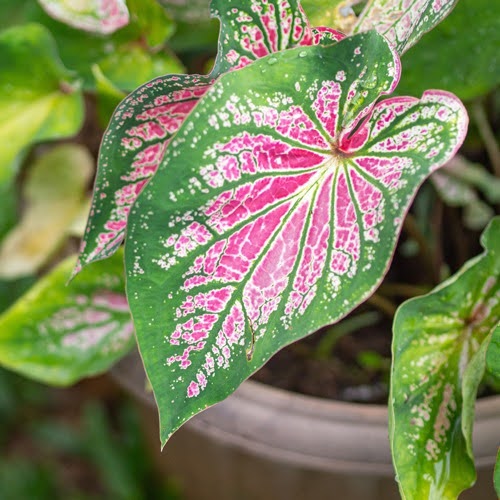
Not every challenging summer location is in full sun. For shaded areas that still need bold color and texture, caladiums offer a beautiful solution. Grown strictly for their spectacular heart-shaped or lance-shaped leaves, caladiums come in show-stopping patterns of white, pink, red, and green, often splashed, veined, or edged in contrasting colors.
Depending on the variety, plants range from compact 8-inch dwarf types perfect for container edges, to bold 24-inch specimens that make a real statement. Unlike the other plants in this lineup, caladiums prefer part shade to full shade, though newer, sun-tolerant varieties can handle a few hours of direct morning light if kept consistently moist.
They aren’t pollinator plants since they rarely flower, but their real merit is providing color where flowering annuals struggle. Use them as a dramatic filler under trees, along shaded walkways, or as the star of a shade container paired with ferns, hostas, or impatiens.
For homeowners battling patchy shade alongside sunny beds, caladiums are the perfect complement to the heat-lovers above—proof that a colorful landscape doesn’t have to stop where the shade begins.
Vinca: The No-Fuss Bloomer
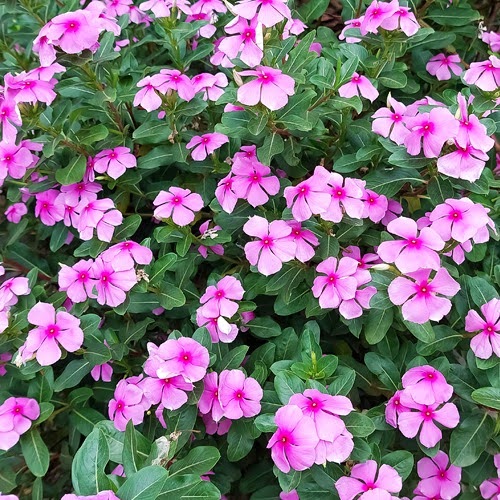
Annual vinca (Catharanthus roseus) is practically built for Kansas City summers, shrugging off heat, humidity, and drought that would flatten less resilient plants.
Its glossy, dark green foliage sets off flat, five-petaled blooms in white, pink, red, and lavender, each often featuring a contrasting ‘eye’ in the center. Most varieties form neat mounds eight to 18-inches tall, making them ideal for garden beds, borders, and containers alike.
Vinca needs full sun and, unlike many annuals, actually prefers to dry out between waterings — soggy soil is its biggest enemy. While it’s not a top pollinator plant, its glossy foliage and long bloom season make it a dependable filler that keeps beds looking finished all summer.
It looks especially sharp paired with purslane, marigolds, or ornamental grasses for a low-maintenance, high-impact combination.
Angelonia: The Elegant Heat-Lover
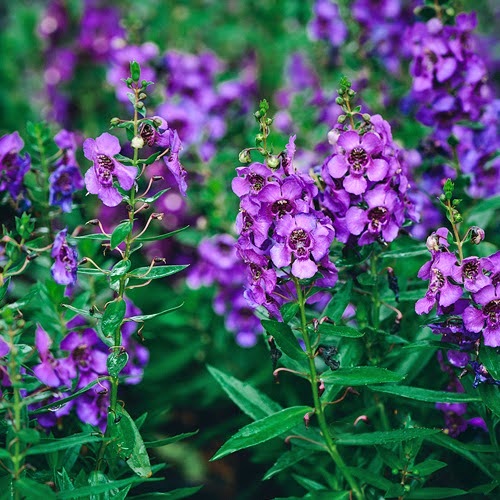
Sometimes called “summer snapdragon,” Angelonia brings a more refined, upright look to the heat-loving lineup. Its delicate spikes of orchid-like flowers come in shades of purple, pink, white, and bicolor combinations, blooming continuously on plants that typically reach 12 to 24 inches tall.
Angelonia thrives in full sun and genuinely improves as summer heats up, shrugging off humidity that makes many other annuals sulk. It draws bees and butterflies, offering a striking vertical, airy texture that contrasts well with rounder or trailing plants.
Use it as a middle-of-the-border accent, a thriller in mixed containers, or repeat it in a row for a tidy, formal look. It pairs especially well with lantana, coleus, or vinca for a layered, textural planting.
Watering Tips for Summer Annuals
Even heat-loving annuals need consistent watering while they’re getting established. Water newly planted annuals deeply at the base of the plant, preferably in the morning, and check the soil regularly during periods of extreme heat.
Containers may need to be checked daily, since they dry out much more quickly than plants growing in the ground. Always make sure containers have drainage holes, and avoid letting pots sit in standing water.
Remember that each plant has different moisture needs. Coleus and caladiums prefer consistently moist soil, while drought-tolerant annuals such as vinca, lantana, and purslane prefer to dry out slightly between waterings and shouldn’t be kept constantly soggy.
Adding a light layer of mulch around plants in landscape beds can help retain soil moisture, reduce weeds, and keep roots cooler. When possible, plant or refresh containers in the morning or evening rather than during the hottest part of the afternoon.
Watering Essentials
Make summer plant care easier with the right watering tools. Shop garden hoses, watering wands, nozzles, and sprinklers to keep your containers, flower beds, and newly planted annuals healthy during hot weather.
Ask a Garden Advisor
Not sure which annuals are right for your sunny garden bed, shaded patio, or summer containers? Visit one of our Suburban Lawn & Garden locations and talk with a Garden Advisor.
Our team can help you select plants that match your lighting conditions, watering habits, container size, and landscape needs, so you can enjoy beautiful color throughout the rest of the season. Plant selection and availability may vary by location, so stop in soon to see what’s currently in stock.
For your convenience, you can also contact a Garden Advisor online by clicking below to submit your questions.