BUTTERFLY BUSH CARE GUIDE
Learn how to plant, prune, and care for a butterfly bush to attract pollinators and enjoy continuous blooms throughout the season.
A Pollinator Favorite in the Garden
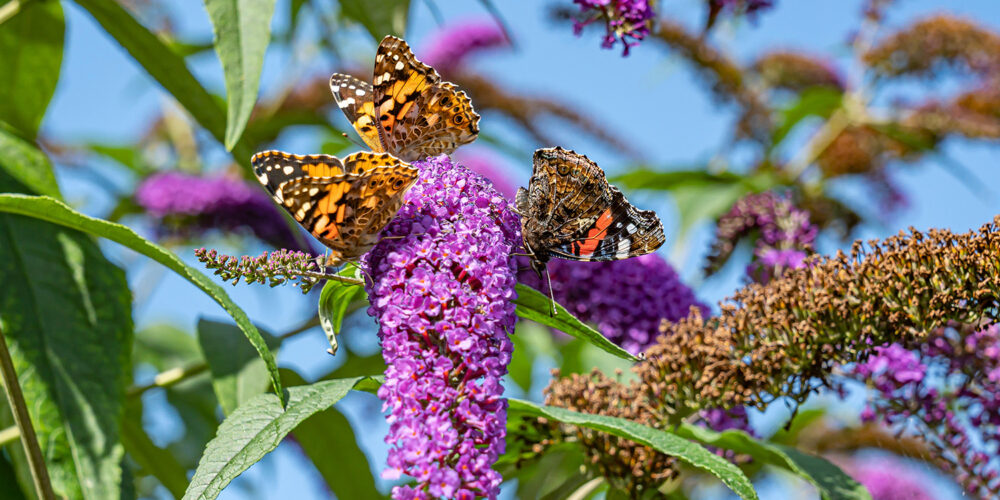
Butterfly bush (Buddleia) has long been a favorite for bringing movement and life into the landscape. Known for attracting butterflies, hummingbirds, and other pollinators, these plants add both color and activity to your garden.
At Suburban Lawn & Garden, you’ll find a wide selection of butterfly bush varieties in different sizes and bloom colors, making it easy to find the right fit for your space.
Choosing the Right Location
Sunlight is Key
For the best blooming performance, plant butterfly bush in a location that receives at least six hours of sunlight daily, with full sun being ideal.
South or west-facing areas with minimal shade provide the strongest growth and most consistent blooms.
Soil Preparation and Planting
Start with Well-Drained Soil
Butterfly bush prefers light, well-draining soil that retains moisture without becoming soggy.
A simple and effective mix includes:
- 50% native soil
- 50% organic soil conditioner
Blend thoroughly to create a loose, workable backfill that supports strong root development.
Planting Steps
- Dig a hole 1½ to 2 times wider than the root ball
- Keep the depth equal to the root ball height
- Place the plant so the top of the root ball sits at or slightly above ground level
- Backfill with your soil mix, gently firming as you go or watering in as you fill
- Apply 2–3 inches of mulch, keeping it a few inches away from the base
Watering at Planting
After planting, give your butterfly bush a strong start with a root stimulator solution.
Mix 5 gallons of water with 1 cup of root stimulator, then slowly water the soil around the root ball. Focus on soaking the soil rather than the foliage.
Check moisture levels regularly, especially during the first growing season. Watering needs will vary based on temperature and rainfall, but checking at least twice a week is a good rule of thumb.
Pruning and Maintenance
When and How to Prune
Butterfly bush should be pruned in early spring, once new growth begins to appear. These plants can be slow to leaf out, so patience is important.
Remove any branches that do not show new growth. In some cases, especially after a harsh winter, butterfly bushes may die back to the ground. When this happens, it will often recover quickly as temperatures warm.
Encourage Continuous Blooms
Removing spent flowers throughout the season helps encourage new blooms and keeps your plant looking tidy.
Feeding Your Butterfly Bush
For best performance, fertilize twice per year:
- Mid-April
- Mid-July
Slow-release fertilizers such as Jacks Classic Blossom Booster or Osmocote work well. Follow label directions, but a general guideline is 3–4 tablespoons per plant.
Butterfly Bush FAQs
Do I need to mulch around my plant?
Yes. Mulch helps regulate soil temperature, reduce stress, and retain moisture throughout the growing season.
How often should I water?
Check the soil under the mulch at least twice a week. If the top 2 inches of soil are dry, it’s time to water. A deep watering, around 5 gallons depending on plant size, is typically sufficient.
What about insects like aphids or spider mites?
If you’re planting butterfly bush to attract pollinators, avoid broad insecticide use whenever possible.
Hand pruning affected areas is often the best first step. If treatment is necessary, use an organic option such as pyrethrin in the evening after pollinator activity has decreased.
A Garden Full of Life
Butterfly bush is one of the easiest ways to bring color, movement, and pollinators into your landscape. With proper planting, pruning, and care, it will reward you with continuous blooms throughout the season.
Our friendly Garden Advisors are here to help you select the right variety and guide you through planting and care. Visit our Suburban Lawn & Garden locations in Martin City, Lenexa, or Roe for everything you need.
Come Grow with Us.
Contributing Writer: Trav the Tree Guy