TINY ECOSYSTEMS, ENDLESS CHARM
Terrariums bring greenery indoors in a beautiful, low-maintenance way. With the right materials and plant choices, these miniature gardens can thrive for months with very little upkeep.
What You Need to Make a Terrarium
Every successful terrarium starts with proper layering and quality materials.
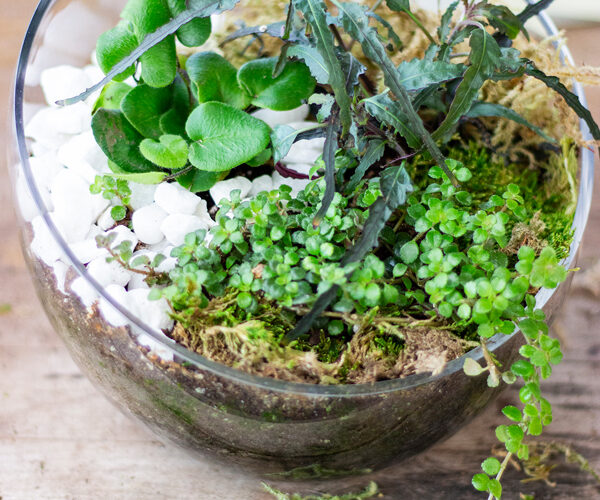
Start with a clear glass container designed for terrariums. Glass allows light to reach plants while showcasing the layered design inside. Explore available styles in our Terrarium collection.
Because terrariums do not have drainage holes, a drainage layer is essential. Add small stones or gravel such as Decorative Pebbles to the bottom of the container to keep excess moisture away from roots.
Next, add a thin layer of Ferti-lome® Charcoal. Charcoal filters water, reduces odors, and helps maintain a healthy terrarium environment.
Add soil appropriate to your plant selection. Use ferti•lome® Ultimate Potting Mix for foliage-based terrariums, or ferti•lome® Cactus & Succulent Mix for open terrariums with succulents or cacti.
Finish by adding Decorative Moss to soften the design and give the terrarium a finished, natural look.
Best Plants for Closed Terrariums
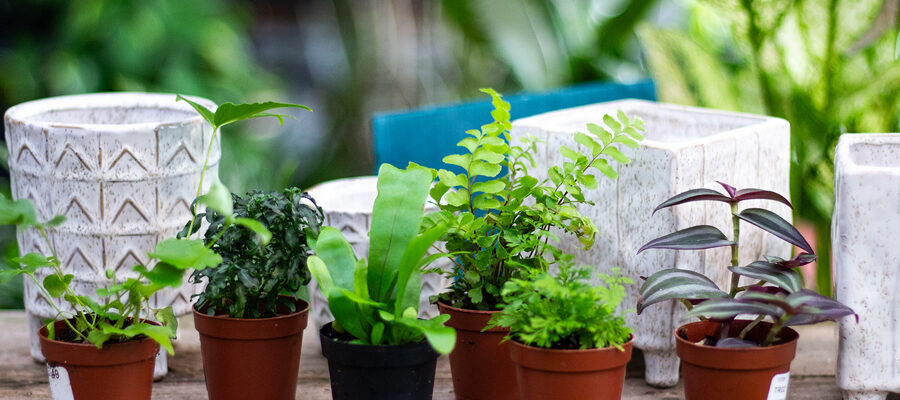
Closed terrariums create a humid, self-sustaining environment ideal for moisture-loving plants. Fittonia (nerve plant) stays compact and thrives in humidity, while miniature ferns add soft texture and a woodland feel. Selaginella provides feathery greenery, moss helps regulate moisture, and miniature begonias offer striking foliage that performs well in enclosed spaces.
Best Plants for Open Terrariums
Open terrariums allow airflow and suit plants that prefer drier conditions. Peperomia and Pilea remain compact with interesting leaf shapes, while dwarf snake plants add structure and tolerate lower humidity. Succulents and cacti should only be used in open terrariums where soil can dry between waterings.
How to Build a Terrarium (Step-by-Step)
- Begin by adding decorative pebbles to the bottom of the glass container, followed by a thin layer of charcoal.
- Add soil suited to your plant selection, then gently plant your greenery, loosening roots slightly before placing them.
- Arrange taller plants toward the back or center and smaller plants toward the front to create depth.
- Finish by tucking moss around plants and exposed soil.
- Water lightly using a plant mister such as our Misters. The soil should be slightly moist, never soggy.
Light & Watering Guidelines
Terrariums prefer bright, indirect light. Avoid direct sunlight, which can overheat the glass and damage plants.
Closed terrariums require very little water; light condensation is normal. If the glass stays foggy all day, briefly remove the lid to allow airflow. Open terrariums dry out more quickly and should be watered lightly when the soil surface feels dry.
Suburban Recommends
Suburban Lawn & Garden offers everything you need to build and care for a terrarium, including glass containers, decorative pebbles, charcoal, soil, moss, plant misters, and a curated selection of terrarium-friendly plants. Our knowledgeable team is always happy to help you choose the right materials and plants for your space.