How To Plant a Tree for Life


Most of us are familiar with the saying, “The best time to plant a tree is 10 years ago…the second best time is now.”  Trees are so beneficial and beautiful, but how do you choose the right tree and how do you plant it properly to insure a lifetime of enjoyment?

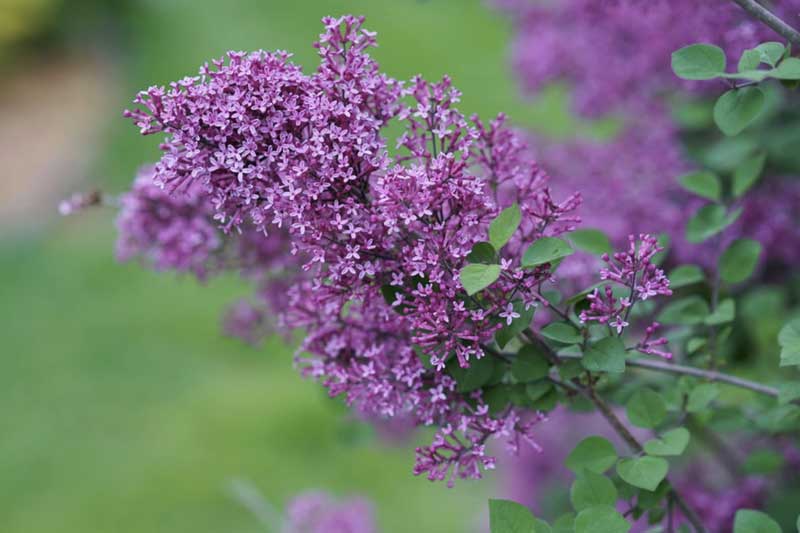
I suppose the best place to start will be selection.  By determining your needs and wishes, you can narrow down your selection quite a bit.  Are you wanting a shade tree? Are you looking for gorgeous spring flowers, summer flowers, both shade and flowers? There are 5 main categories of trees: shade, flowering, ornamental, evergreen and fruiting.  Once you have chosen the type of trees to consider, take a “virtual tour” of the trees on our website.  I recently updated the tree section and the majority of our trees are now pictured!  We grow the majority of our own stock and only present a healthy and well-cared-for selection for you to choose from. Here are just a few of the many that we stock…they are from the shade, flowering and ornamental categories, or a combination of the three.

Other details to consider include placement, height, overhead obstructions, neighboring properties and water lines. As a tree grows it spreads roots out horizontally to anchor it to the earth and provide strength and support while also gathering nutrients, oxygen and water.Keeping this in mind, it is a good idea to know the maximum height of the tree you are choosing. Generally speaking, the spread of the tree’s roots (from the trunk out) will be

about half it’s height at maturity, possibly extending further after that. When deciding the location for your tree, choose one which will keep the tree a proper distance away from the foundation of your house and sewer/water pipes.  Don’t forget to look up, as well, to make sure there are not any overhead lines.  Once you have decided on a location, call 811 to notify your utilities you are planning to dig so they can mark your buried utility lines.  Once they have confirmed your selected installation spot, come on out and grab a golf cart!  Peruse through hundreds of trees and find just the right one!

Now that you have found your tree, it is time to install it…correctly.  Maybe you took the “easy” route and opted for us to plant it for you (we will even call 811 for you), but if not, here are the guidelines to follow:
When digging your hole, make sure it is twice as wide as it is deep.  The depth needed should be measured from the bottom of the root ball to about two inches below the base of the tree (the flare denotes the base).  Occasionally, the soil in the ball has crept to hide the flare of the tree.  Be sure to inspect closely to insure the flare is left above soil level.
The root ball should rest on a firm surface (no loose soil).  If you must back-fill to adjust the depth of the hole, be sure to tamp it down well prior to installing your tree. A mixture of compost and topsoil combined with a root stimulator will be used to fill in around the root ball.  One suggestion is to try a product with mycorrhiza  bacteria, like Myke® Tree and Shrub.
Add layers of your mixture while using a stick or small trowel to gently distribute and also remove air pockets.  Gently remove about a third to one half of the burlap once you have filled around the base of the root ball.  The fill mixture will be slightly above your original soil line to allow for settling.  The flare of the tree (area where the trunk begins getting wider near the ground) will be about an inch or so above this fill soil level.  The flare of the tree should NEVER be under the soil level.  If you had to back fill the hole to adjust your depth prior to placing the tree in the hole, you will want the flare of the tree 2-3 inches above the soil line to allow for settling.  A light and even layer of mulch (about 2-3 inches) can then be applied.   Keep the mulch about 4 inches away from the trunk of the tree. The mulch should be the deepest (3-4 inches) over the area where the root ball and fill soil meet.
Finally, you will want to stake your tree.  When a tree is forming roots, they are initially very thin and delicate.  Excess rocking of your tree will tear these roots and increase the time it takes for your tree to establish itself.  Staking temporarily provides the “anchoring” effect that will eventually be replaced by the roots.  Drive at least two stakes (sometimes three) on either side of the tree (outside of the planting hole).  You will want to use a post driver to insure proper depth and optimum strength of the posts.  Place them at an angle leaning away from the tree and make sure the studs are facing away from the tree. There are various options to use for tethering the tree to the stakes.  We have a product called tree chain which is a rubberized “rope” which allows for necessary movement and slack.  The other option is using wire with a piece of garden hose to protect the tree’s surface.  If you have chosen wire, be sure to allow your tree to sway about an inch or two.  Providing this slack stimulates the tree to create a more extensive and strong root system.  If the tree is not allowed to move at all it will not be stimulated to create a strong anchor and will be extremely unstable when you remove the stakes.
Congratulations!!  You have now planted your tree….but WAIT!  Probably one of the most important steps is to water properly.  You might think you can’t mess this up, but in the case of planting a tree, it is extremely important to follow instructions.  More often than not, the root ball will be fairly dry when your tree arrives.  This is because water would

make it much heavier to work with.  Most of you have probably heard about laying a garden hose on top of the root ball and letting it run (slow stream) for quite a while.  This is probably the best way to go about watering your tree, provided you can move the hose around the tree periodically to insure a thorough soaking.   The root ball and surrounding soil will need to merge fairly quickly so the roots can begin growing outward.  If the root ball dries out and shrinks, it will not bond with the surrounding soil.  Do NOT depend on a rain shower or even a heavy downpour to complete this task for you.  After this initial phase (about a couple of weeks of soaking every other day or so), you can drop back to a thorough soaking twice a week or so for about a month.  After that, simply water as needed. These instructions apply to well draining (normal) soil conditions only. If your tree is planted in an area which collects water or does not drain well, monitor and adjust as necessary.

Inspect your tree closely for signs of stress or illness.  Check the staking periodically for loose stakes or ties.  Protect the bark in the winter by wrapping it to just below the lowest limbs.  Give yourself a pat on the back, sit back and admire your handiwork!  Enjoy your beautiful tree!
The Garden that is Finished is Dead

Leaves of Three

Leaves of three…let it BE!  Do I ever listen, nooooo…have to “roll” in it at least once per year.  I swear I am being careful, wash with a Poison Ivy soap afterward, but inevitably I  will never fail to miss a spot.  This time it is just beneath my left eye…and is fairly obvious that I (without thinking about it) swept my finger across my face.  Aaarrrggg!  Well, now comes the part where you suffer through, refraining from scratching to avoid scarring (very common with rashes) and just swear to stay out of it the rest of the year.

Oddly enough, your first contact with Poison Ivy for the season…

may be relatively mild, but if you continue to have repeated contact, your rashes can become fairly severe.  As I looked around my property, I could tell that this is going to be a very favorable season for this menace.  I cleared Poison Ivy out of my fenced area to prevent my toddler from running across it, but I am sure I will have to monitor regularly for additional plants.  There are special herbicides to combat this and other vines.  Round-Up will not work well because it does not travel well enough to affect the entire vine.  There are products labeled specifically for Poison Ivy and other tough brush.  Use that, you will be glad you did.

Do you think you would be able to spot it without a doubt?  It can be difficult, but the primary species (there are 9) that we have in our area are relatively easy to identify.  While I can spot from about a mile away now, I once relied on three (sometimes 4) factors which are generally reliable signs.  The first sign are the “thumbs”.  Not all species of this Poison Ivy possess this feature but, more often than not, this is the case in our area.  The two lower leaves will have thumbs on the lower edge of their leaves (see pic).  The second identifying factor is that the rachis which attaches the top leaf is elongated unlike most mimicking trifoliates.  The third factor that I like to rely on does not always appear, but very frequently this plant will appear “wilted” or droopy.  During the summer months you may find one more distinguishing characteristic which is small blisters or blemishes on the leaves. These sometimes cover great portions of the leaves.

Habit can also be helpful when identifying this creature.  As a vine, they will generally be growing near something tall to eventually climb on.  While they may start out in a shaded  under story setting, they will seek out a way to get closer to the sun.  Be particularly careful when taking down trees and inspect them closely for possible “hitchhikers”.  The foliage will not necessarily be growing from the stem which has attached itself to the tree’s trunk and you may have to look up to see it hiding among the rightful foliage.  Eventually the vine can choke out the existing tree and use the trunk as it’s support.

Keep in mind, when cutting down a tree with Poison Ivy attached, that ALL parts of the plant are poisonous and it may be best to contract with someone who is not alergic to take care of it for you.  Notice the large vine attacking this tree.  These red fiberous hairs are another sign of aged and vining Poison Ivy.

I can’t emphasize the following statement enough: DO NOT BURN POISON IVY!  While is sounds like a good way to dispose of it, the poisonous oils (urushiol) will actually be carried through the smoke of the fire straight into your lungs.  Contact with the skin is one thing, systemic contact with urushiol will surely warrant a hospital visit.  This has actually happened to me before and I truly never wish the same fate on another person.

Now that we can spot it with relative certainty, what other plants might try to trick us?  Two of the most common in this area are Boston Ivy (grown regularly in landscapes) and Virginia Creeper.  Both of these can resemble Poison Ivy, but upon close inspection, you will notice the obvious differences.  The young leaves of both plants are remarkably similar to the villain, and you may have to inspect the entire plant for a better determination.  When in doubt, just leave it alone or spray it!

Other points to consider which may surprise you (gathered from poisonivy.us):

  • 1/4 ounce of urushiol is all that would be needed to cause a rash on every person on earth.
  • Urushiol can remain active for up to 5 years (sometimes longer) on any surface, including dead plants.
  • Half of the population is alergic to Poison Ivy, Oak and Sumac (or all three).
  • You may develop sensitivity later in life.
  • The only cures are those that annihilate urushiol.
  • The rash is NOT contagious.  The ONLY time you can spread the oil is if it has been left on your hands or garden utensils.
  • Stay away from forest fires, direct burning or lawnmowers and trimmers if they are cutting these plants.
  • Urushiol does NOT remain within your skin (inside the blisters or otherwise).  You can not spread the rash by breaking a blister.  You can however increase your risk for scarring.
  • Poison Sumac and Oak pack just as much of a wallop.  Stay safe and watch for them, too!

The Garden that is Finished is Dead


The Succulent Alternative


Mmmmm…Spring!  It almost feels like a dream, spring-like weather for such an extended period of time.  It also makes me wonder what kind of summer is around the corner.  Just in case we are headed for a heat bath, I have decided to fill my porch pots with drought tolerant plants.  If you have spaghetti lines (stemming from your irrigation system) inserted into your pots, you are sure to have lush plants all season long.  If you must hand water (like I do), it is difficult to keep them looking nice in July and August.  Choosing plants which can handle the heat and the rapid drying of the soil might be the way to go if you continually struggle to keep them looking nice.

If you have never tried using succulents in your pots, I think you will truly enjoy them.  They can even be mixed in with other annuals as accents.  Our Tropicals Department stocks many interesting varieties and hardy sedum (in our Perennials Department) can also be used as filler.  If you decide to use the non-hardy type, they can easily be brought indoors and watered once a month through the winter.  Janet and Nancy (135th & Wornall)

pre-assemble many pots which are ready for your outdoor living space, or you can select your own pot and plants and have fun arranging it yourself.

Nancy and Janet creations

There are no rules to succulent arranging, you can set the structure as you would a standard annual pot (something tall, something bushy & something cascading), or choose a landscape style (with berms and rocks).  You might expand your creativity by finding some interesting receptacles to showcase a lovely selection of succulents.  You really can’t go wrong.

Something that I love about these tough plants is that they have such unique design patterns and many have vibrant coloration.  They are also extremely easy to grow and fun to work with.

This is definitely a project that kids will enjoy, as well.  Be sure to warn them about cactus needles if they are going to be used.

I was plant shopping this past weekend with my little guy and he decided a cactus “needed some love” in the form of a pat on the “head”.  While he never cried, I knew it had happened because he wouldn’t use that hand to hold onto the cart anymore.  He did cry when I tried to scrape the fine little hairs out of his hand.  Poor little thing….cacti are beautiful, but the handling should definitely be left to the adults.

He had forgotten all about the incident by the following day and was eager to help me assemble my sedum pots.  I chose to use hardy sedum, which I will transfer to my garden beds later in the season.  In addition, I decided to stack a couple of pots together for added interest.  My son even “created” his very own.  Most of all I wanted something easy to care for with architectural interest with supplies which I already had.   As the season progresses, these pots will be tightly packed, plush with these lovely little plants. The golden Sedum ‘Angelina’ will cascade over the sides and contrast against the plants with a bluish cast, as well as, the terra cotta pots.  Once established in their pots, they will require very little supplemental water.

When selecting your filler plants, be sure to use one that grows quickly (a sedum or other).  If in doubt, ask us!  Smaller or elongated pots make great centerpieces for outdoor tables, as well.

Above all, have fun!  Enjoy the year that we are having and get out there and enjoy the weather while you can!!  I will be in touch soon.

The Garden that is Finished is Dead


Spring Colors for 2012!

Spring has sprung!

I don’t think any resident of the midwest can say that Spring “sneaked up on them”.  I can’t remember a winter similar to the one we just had and I certainly hope it is not an indicator of our summer to come.  Even while the temperatures were spring-like, the landscape was still drab and dull…quite depressing, really.  At least when there is snow on the ground the ugliness is hidden.  One thing is certain, it is time to start thinking about our spring color!  My favorite thing about Spring is that our yards become full of life and beauty once again.

This year, unlike many in the past, is sporting primarily nature based tones for the color palette.  This selection changes every year and sets the tone for fashion, home decor, etc. Inevitably, it carries over to include our seasonal splashes of pizazz infused into our outdoor living spaces.  If you are unfamiliar with the 2012 choices, here they are!

This palette of lovely colors is derived from plants, stones and gems found in nature.

 Selecting our flowers, pots and other outdoor accessories will be so much easier.  Use a few or all of the colors in your arrangements.  I considered each of the samples from the top row to create a montage of possible flower combinations.  Amazingly, it was very easy to find multiple selections for each.  A combination of any of these flowers will look stunning in your pots or annual beds.

Flower color will satisfy the bright tones for this year, but you can also consider foliage plants to complete your arrangements.  Several plants, such as Coleus, come in a wide range of color and can easily be used in pots or beds.  Another option which you may not have considered is mixing Tropical plants or succulents into your annual pots.  Many tropical/houseplants appreciate quite a bit of sunshine, but others will be suitable for the north or east side.

Succulents are an excellent choice for sunny locations.  There are many wonderful and interesting shapes and sizes of these tough plants.  While they tend to get overlooked because they are in the Tropical section of our store, be sure to veer off the beaten annual path to take a look.  You would be surprised how well they can tie an arrangement together.  If you need help arranging your plants, refer to a blog I wrote last year: “The Perfect Annual Pot”.

Once you have chosen all of your flowers, you will want to consider the pots and complimenting statuary.   There are three blue hues to consider and while these colors do occur in nature (soladite gemstones, etc) it would be very difficult to find a plant which even came close.  Blue glazed pots, however, are very easy to find.  Surprisingly, a mixture of the different 2012 shades of blue seem to work quite nicely.  Solitary “feature” pots would work just as well.  

The possibilities are endless and the color selection is fantastic.  I predict this will be a fun year to decorate our seasonal spaces.  If you have not become a fan of our Facebook Page, we would love for you to.  We plan to offer rewards exclusive to our Facebook fans. In addition, sharing photographs of your completed pots would be welcomed!

As the danger of frost is nearly over, the time when when we can have beautiful yards and gardens is just around the corner.  I can’t wait!!  Hopefully you are just as pleased with the color palette for 2012 as I am, use all of them or just a few. Either way, have fun getting your hands dirty!

The Garden that is Finished is Dead

Save Stanley Nature Park!

When was the last time you spent some time with nature?  Nature walks are one of the most therapeutic things you can do, great for the mind, the senses, the body and the spirit.

The most beneficial setting is not a park which was “constructed” my man, but one that

was left as is, with walking trails carved in by those there before you.  These types of places are becoming harder and harder to find without having to travel some distance outside the city.

Stanley Nature Park is a little piece of therapy in the middle of the suburban sprawl.  Unfortunately, the local school district thinks they may have alternate uses for the land and is attempting to purchase it from the Parks and Recreation Department.  Truly and honestly, I believe this is just another form of injustice to our children and future grandchildren.

We are pushing them further and further away from nature and they are suffering for it.  You can’t get these pieces of nature back, you can’t recreate them elsewhere, they can’t be moved…they will be gone.  It is sad.

If you would like to speak your mind on the topic, please join us this coming Saturday from 5-7 pm at our Roe location (105th and Roe) for a meeting to discuss the plan for the upcoming JCPRD Commissioners public meeting which has been set for February 28th at 6 pm.

Thank you!  We hope to see you this Saturday!